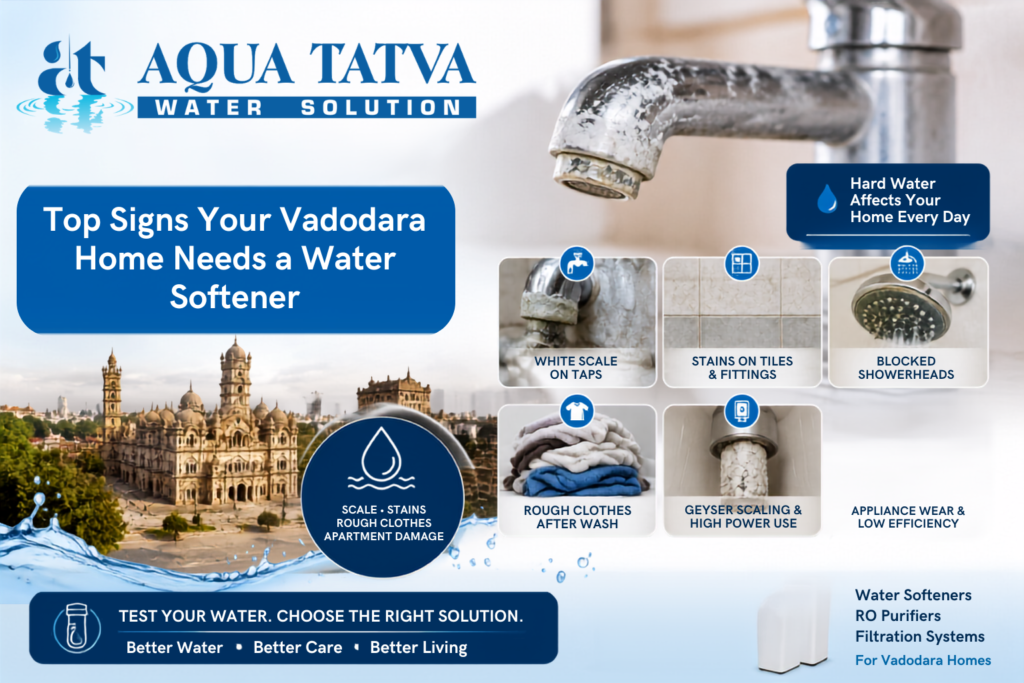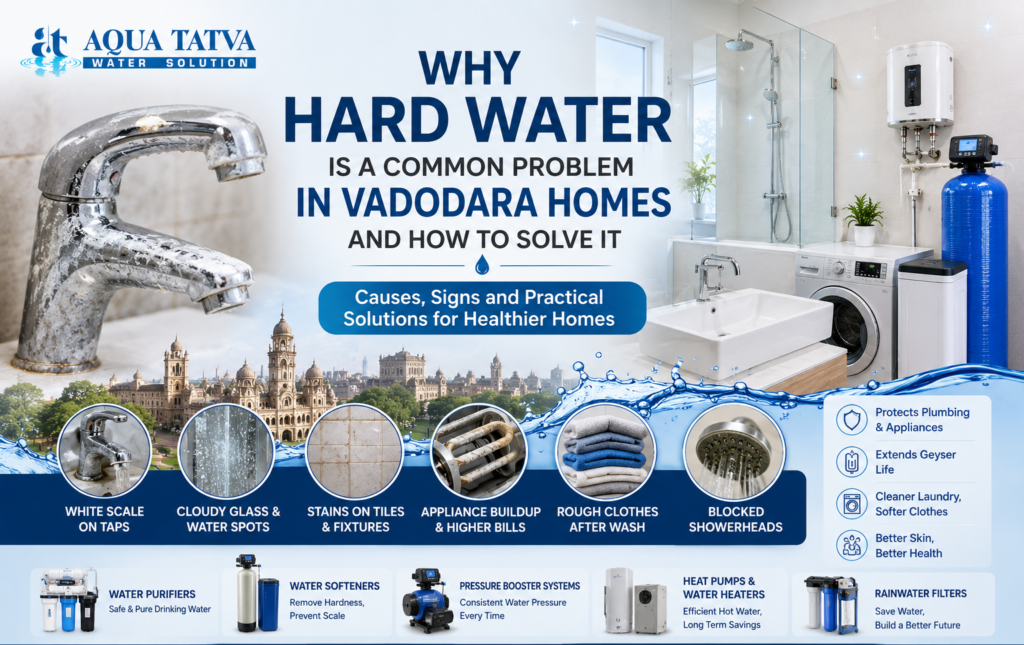
Hard water is common in many homes in Vadodara because water often comes from mixed sources, including borewell water, municipal supply, tanker water, and society storage tanks. These sources may contain higher levels of calcium and magnesium, the minerals mainly responsible for hardness. When this water flows through your home every day, it can leave white scale on taps, stains on bathroom tiles, roughness in clothes, poor soap lather, and deposits inside geysers, washing machines, and pipelines.
If you are looking for a hard water solution in Vadodara, the first step is to understand the cause. Hard water is not always a drinking water safety problem on its own, but it can cause issues with comfort, cleaning, plumbing, and appliances. A water softener can reduce water hardness, while an RO purifier can improve drinking water quality when TDS or taste is a concern. In some homes, both systems may be needed for different purposes.
For example, a family in a flat may notice white marks on taps and dry hair after bathing. A bungalow owner may face geyser scaling and dull flooring. A residential society may receive complaints from many residents about bathroom stains and low water flow. These are all common signs that the water quality should be tested.
The best solution starts with a water test. Once you know the hardness level, TDS, water source, and daily usage, you can choose the right treatment system for your home.
What Is Hard Water?
Hard water is water with a higher concentration of dissolved minerals, mainly calcium and magnesium. These minerals naturally enter water when it passes through rocks, soil, underground layers, or certain distribution systems.
In simple words, hard water is the reason you may see:
- White marks on taps
- Cloudy stains on glass partitions
- Soap that does not foam well
- Rough clothes after washing
- Scale inside geysers and appliances
Hardness is usually measured as milligrams per litre (mg/L) as calcium carbonate. A basic water test can show whether your home has soft, moderately hard, hard, or very hard water.
| Water Hardness Level | Approximate Range | What Homeowners May Notice |
| Soft | 0 to 60 mg/L | Few scale or soap issues |
| Moderately hard | 61 to 120 mg/L | Mild stains and lower soap lather |
| Hard | 121 to 180 mg/L | Visible scale, rough laundry, fixture marks |
| Very hard | Above 180 mg/L | Heavy deposits, appliance scaling, frequent cleaning |
These ranges are useful for understanding the issue, but treatment decisions should be based on a proper water test and site inspection.
Why Is Hard Water a Common Problem in Vadodara?
Hard water is common in Vadodara because homes do not always receive water from one fixed source. Many families depend on municipal water, borewell water, tanker water, or a mix of sources. Residential societies may also store water in underground and overhead tanks before it reaches individual flats.
Water quality can vary by:
- Area
- Water source
- Borewell depth
- Tank cleaning schedule
- Pipeline condition
- Seasonal changes
- Mix of municipal and private water supply
Areas with borewell or tanker water may face more severe hardness issues. In many cases, the water looks clear but still contains dissolved minerals. That is why homeowners may not notice the problem until scale appears on taps, tiles, geysers, and appliances.
What Are the Most Common Signs of Hard Water at Home?
Hard water usually gives clear warning signs. These signs appear in bathrooms, kitchens, laundry areas, and on appliances.
1. White Scale on Taps and Showerheads
White or chalky deposits around taps, faucets, showerheads, and geyser outlets are one of the clearest signs of hard water. These deposits form when water dries and leaves minerals behind.
You may clean the tap today, but the marks return within a few days. This is a sign that the problem is not only dust or poor cleaning. It may be mineral buildup from hard water.
2. Poor Soap and Shampoo Lather
Hard water does not mix well with soap. It reduces foam and makes soap feel sticky. You may need more shampoo, body wash, or detergent than usual.
Common signs include:
- Soap does not foam properly
- Skin feels sticky after bathing
- Hair feels heavy or rough
- More detergent is needed for laundry
- Bathroom floors feel slippery after use
This can increase daily product use and reduce the effectiveness of normal cleaning.
3. Rough Clothes After Washing
Hard water can leave mineral residue in fabric. Over time, clothes may look dull and feel rough.
You may notice:
- Towels feel hard
- White clothes lose their brightness
- Dark clothes fade faster
- Bedsheets feel less soft
- Detergent marks remain on fabric
If your washing machine is working properly but clothes still feel rough, test the water hardness.
4. Dry Skin and Dull Hair
Many people notice dry skin or rough hair after bathing with hard water. Hardness minerals can leave a layer on skin and hair, which may reduce the effect of soaps and shampoos.
This does not mean hard water affects everyone in the same way. Skin type, hair type, bathing temperature, and personal care products also matter. Still, if several family members notice dryness after moving to a new home or changing the water source, water testing is a smart step.
5. Geyser and Water Heater Scaling
Hard water affects geysers because heating increases scale formation. Minerals settle inside the heater tank and on heating elements.
Signs include:
- A geyser takes longer to heat water
- Hot water pressure becomes weak
- Crackling or popping sounds appear
- Electricity use may increase
- Service calls become more frequent
Scale can reduce heating efficiency and shorten appliance life. This is a major concern for homes with multiple bathrooms.
6. Stains on Bathroom Tiles and Glass
Hard water stains often appear on tiles, buckets, mugs, and glass partitions. These stains may look white, grey, or cloudy.
Regular cleaning may temporarily remove them, but they return quickly if the water remains untreated. This is why many Vadodara homeowners feel their bathrooms never look fully clean, even after scrubbing.
7. Reduced Water Flow Over Time
Hard water can create scale inside showerheads, taps, pipes, and geyser outlets. Over time, this buildup may reduce water flow.
Low pressure can also result from pump issues, plumbing design, tank height, or clogged filters. But if the flow has slowly reduced over months, the hardness-related scale may be one reason.
How Does Hard Water Affect Daily Life?
Hard water affects more than bathroom appearance. It can increase effort, maintenance, and cost.
| Area of Home | Hard Water Impact | Practical Result |
| Bathroom | Scale and stains | More cleaning time |
| Laundry | Rough clothes | More detergent and fabric care |
| Kitchen | Cloudy utensils and deposits | Extra cleaning effort |
| Geyser | Scale on heating parts | Slower heating and more service |
| Plumbing | Mineral buildup | Lower flow over time |
| Skin and hair | Dry or rough feeling | More personal care concerns |
For families, the problem becomes frustrating because it repeats every day. For societies, it can lead to resident complaints and higher maintenance pressure.
Is Hard Water Safe to Drink?
Hard water is mainly caused by calcium and magnesium. It is not always unsafe to drink by itself. However, drinking water safety depends on many other factors, such as TDS, fluoride, nitrate, iron, bacteria, odour, and other contaminants.
This is important because a water softener and an RO purifier solve different problems.
A water softener reduces hardness for household use. An RO purifier is usually used for drinking and cooking water when TDS, taste, or dissolved impurities are a concern.
Do not assume that clear water is safe water. Also, do not assume that softened water is the same as purified drinking water. A proper test report gives the clearest answer.
Water Softener vs RO Purifier: Which One Do You Need?
Many homeowners confuse water softeners with RO purifiers. Both are useful, but they are not the same.
| Feature | Water Softener | RO Water Purifier |
| Main purpose | Reduces hardness | Improves drinking water quality |
| Best use | Bathroom, laundry, geyser, appliances | Drinking and cooking water |
| Targets | Calcium and magnesium hardness | TDS, taste, dissolved impurities |
| Installation type | Whole home, bathroom line, society system | Kitchen point |
| Best for | Scale, stains, rough clothes, appliance deposits | Poor taste, high TDS, drinking concerns |
A home may need only a softener, only an RO purifier, or both. The right choice depends on the water test report and the purpose of treatment.
How Can Vadodara Homeowners Solve Hard Water Problems?
The best way to address hard water is to treat it before it reaches bathrooms, washing machines, geysers, and plumbing lines.
Step 1: Test Your Water
Start with a water quality test. Check:
- Total hardness
- TDS
- pH
- Iron
- Chloride
- Fluoride
- Nitrate
- Odour and colour
- Bacterial contamination, if drinking water is a concern
Testing helps you avoid buying the wrong system.
Step 2: Identify Your Water Source
Ask where your home water comes from. Is it municipal water, borewell water, tanker water, or mixed supply?
This matters because treatment needs may change when the source changes.
Step 3: Choose the Right Softener Capacity
A small flat, a bungalow, a villa, and a residential society have different water usage patterns. The softener should match your actual daily requirement.
Before selecting a system, consider:
- Number of bathrooms
- Number of family members
- Daily water usage
- Storage tank size
- Water pressure
- Hardness level
- Available installation space
Step 4: Plan Maintenance
A water softener needs regular maintenance. Most systems require salt refilling and service checks. Automatic systems also need correct settings for regeneration.
A system that is not well maintained may not perform properly.
Step 5: Use RO for Drinking Water If Needed
If your drinking water has high TDS, poor taste, or other quality issues, use a suitable RO or water purifier based on the test results. A softener should not replace a drinking water purifier where purification is needed.
Which Type of Water Softener Is Best for Your Home?
The best water softener depends on your home type and usage.
| Home Type | Suitable Solution | Best For |
| Flat | Bathroom softener or compact softener | Limited space and selected use |
| Bungalow | Whole-house softener | Multiple bathrooms and appliances |
| Villa | Automatic whole-house softener | Higher daily usage |
| Residential society | Central softening system | Multiple flats and common supply |
| Commercial space | Commercial softener | Salons, hotels, clinics, kitchens |
For a society-level system, proper sizing is very important. If the system is too small, residents may still experience hardness issues during peak usage hours.
Practical Tips to Reduce Hard Water Damage
A water softener is the long-term solution, but these habits can reduce damage:
- Wipe bathroom glass after use
- Clean showerheads regularly
- Descale geysers as recommended
- Use the right amount of detergent
- Clean overhead and underground tanks
- Test the water after changing the source
- Service washing machines and geysers on time
- Avoid ignoring slow water flow
These tips can help reduce visible problems, but they do not remove hardness from water.
When Should You Call a Water Treatment Professional?
You should speak with a qualified water treatment provider if:
- Scale returns soon after cleaning
- Multiple appliances need frequent service
- Your geyser performance drops
- Your society has repeated complaints
- You use borewell or tanker water
- Your water source recently changed
- You are unsure whether you need a softener or an RO purifier
A professional can review your water report, inspect the site, and suggest a suitable system. For Indian homes, also refer to the BIS drinking water standards for quality. If you are comparing imported products or guidance from other countries, remember that plumbing rules and water regulations can vary by country, state, and local authority.
FAQs
1. Why is hard water common in Vadodara homes?
Hard water is common in Vadodara because many homes use borewells, tankers, municipal, or mixed water sources. These sources can contain calcium and magnesium minerals that cause hardness.
2. What is the best hard water solution for a home?
The best solution depends on your water test report. A water softener is usually used to address hardness issues, while an RO purifier is used to address drinking water quality concerns such as high TDS or poor taste.
3. Can hard water damage my geyser?
Yes, hard water can create scale inside geysers and on heating elements. This can reduce heating efficiency, slow hot water flow, and increase service needs over time.
4. Does RO remove hard water?
An RO purifier can reduce many dissolved substances in drinking water, but it is usually installed only at the kitchen point. For bathrooms, laundry, and geysers, a water softener is usually more suitable.
5. How do I know if my water is hard?
Look for white scale on taps, poor soap lather, rough clothes, dry skin, cloudy glass, and geyser scaling. A water hardness test gives the most reliable answer.
6. Is a water softener needed for every Vadodara home?
No. Not every home needs a water softener. It depends on the hardness level, water source, daily usage, and the problems you are facing. Testing the water first helps you make the right decision.
Conclusion
Hard water is a common problem in homes in Vadodara because water quality can vary by area, source, storage, and supply conditions. The most common signs include white scale, poor soap lather, rough laundry, bathroom stains, dry skin, dull hair, low water flow, and frequent geyser maintenance.
The right solution starts with testing your water. Once you understand hardness, TDS, source, and usage, you can decide whether your home needs a water softener, RO purifier, filtration system, or a combined solution.
For homeowners, flats, bungalows, villas, and societies in Vadodara seeking practical guidance, Aqua Tatva helps assess water quality issues and recommends suitable water softening, purification, and filtration solutions tailored to real household needs.